Food Planning vs Meal Planning: The Difference
I thought food planning vs meal planning was a semantics game until I tracked my own kitchen. One is picking recipes; the other is the whole system. Here is why the bigger one wins.
I used to think the whole food planning vs meal planning debate was a marketing distinction — two phrases for the same Sunday chore. Then I watched a friend tip a colander of green beans into the trash, and I changed my mind. The beans were fine. Snapping-fresh, the kind that squeak against your teeth. She threw them out because she'd bought them Tuesday for a recipe she didn't make Thursday, and by Sunday they'd softened into a leafy reproach in the back of the crisper. She had, by every definition, planned a meal. Picked the recipe. Made the list. Bought the beans. They hit the bin anyway.
That bugged me enough that I started watching my own kitchen the same way, and saw the same beans everywhere. There's a gap between scheduling a dinner and actually running the system that moves food from a field to your fork without bleeding value at every handoff. Most of us live right in that gap. It's where the money quietly leaks, and where good intentions go to expire in a drawer.
So here's the case. Meal planning is a real thing, and it is not enough. It never was. What you actually need is bigger — and it happens to have a better name.
Food Planning vs Meal Planning: One Slice or the Whole Thing
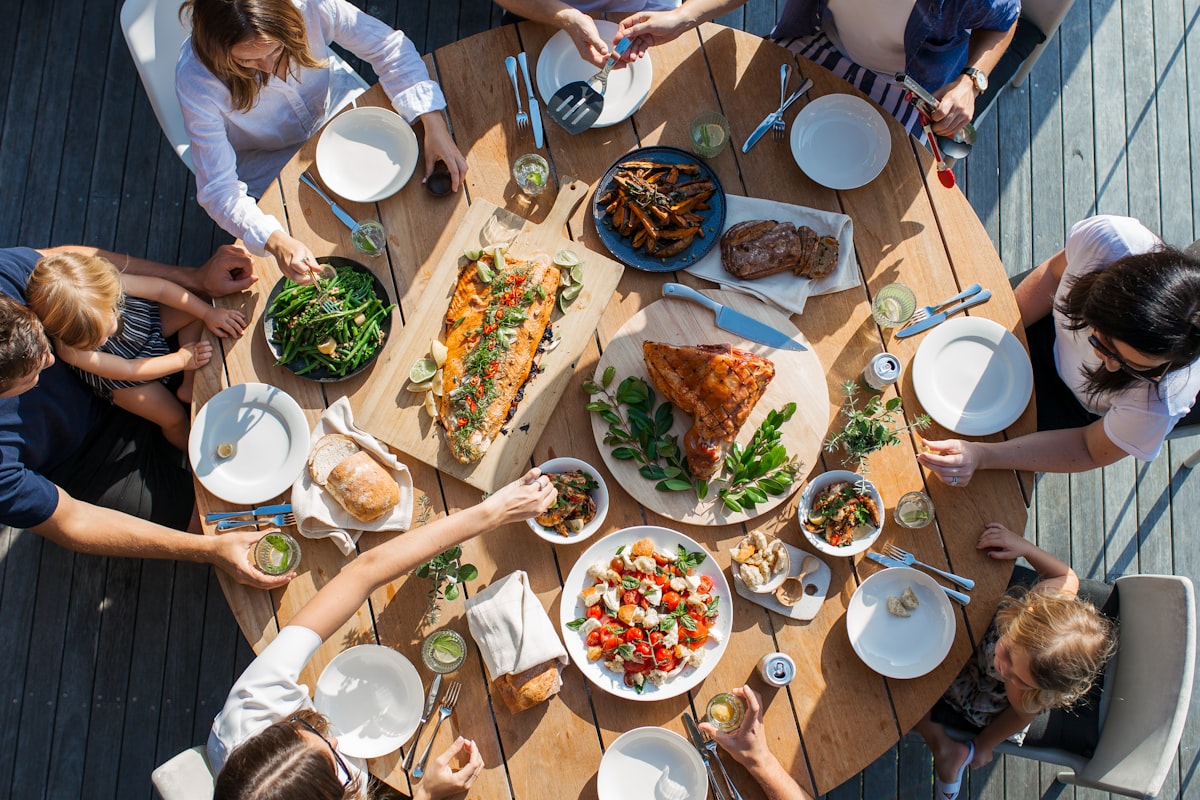
Meal planning answers exactly one question — what's for dinner this week? — and it answers it in a vacuum. You sit down, usually on a Sunday, usually a little resentful, and assign meals to days. Monday, salmon. Tuesday, tacos. Wednesday, that pasta thing. It's a schedule. And like most schedules drawn up by an optimistic version of yourself, it does not survive first contact with a real Wednesday. (My record was a plan surviving to Tuesday lunch.)
So what's food planning, if it isn't just meal planning in a nicer coat? It's the whole loop. Where the food comes from — the store, the Saturday market, the raised bed on the patio. What you already own, aging in the back of a cabinet. How the food meets your body and your goals, the part where you stand at the stove, and the replenishment cycle that closes the loop and kicks it off again. Meal planning is one slice of that, roughly between "I have ingredients" and "I have eaten." A useful slice. Just a small one.
Here's the analogy that made it click for me. Think about money. Meal planning is a single smart purchase. Food planning is the whole financial life — income, savings, spending, the circulatory thing that keeps it all moving. A clever purchase inside a broken financial life won't save you, and a beautiful Tuesday dinner inside a broken food system won't either. You'll still throw out the beans — the leak is upstream of the part you optimized.
Meal planning asks "what should I cook Thursday?" Food planning asks "how does food actually move through my life — and where is it leaking?" Those are not the same question, and only one of them changes anything.
That's the food planning system in a sentence. It's the operating system, and meal planning is one app running on top of it — only ever as good as the thing underneath.
The Planning Gap Is Where the Money Hides
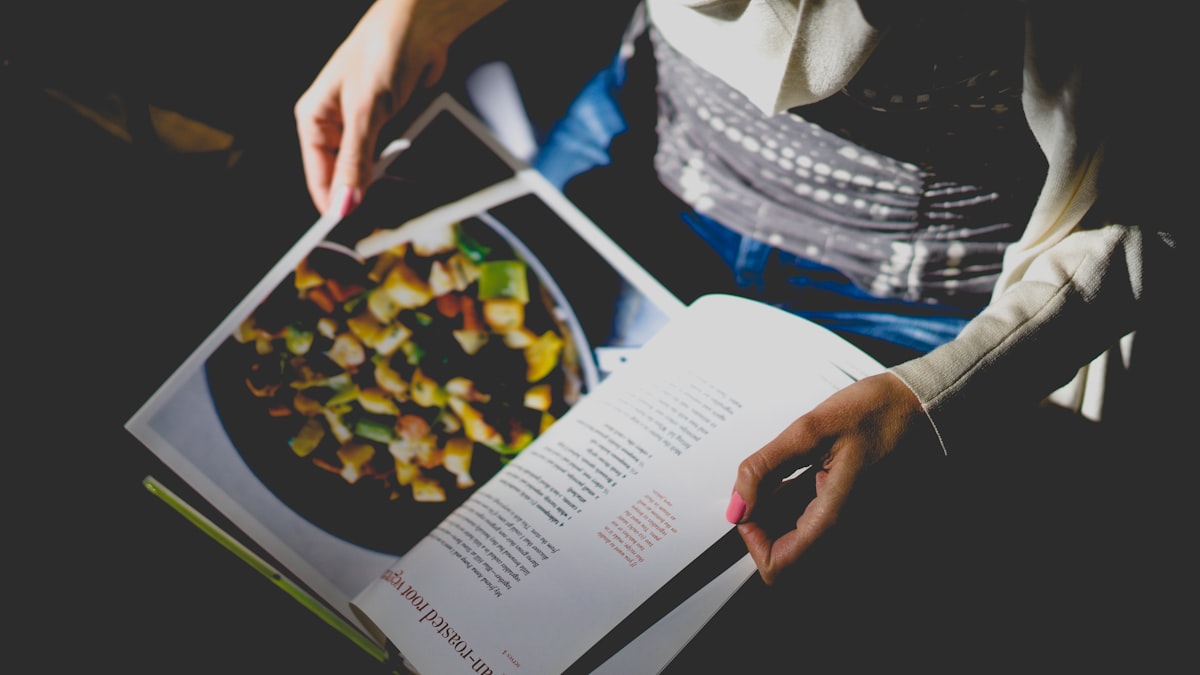
Here's the part nobody pins to a Pinterest board, and the thing that surprised me most: the expensive failure in home cooking is almost never the cooking. It's the seams between the steps. The handoffs, where the information falls through.
You buy a fat bunch of cilantro for one recipe, use a third, and watch the rest go to slime by Friday. You're sure you're out of cumin, so you grab more — and now you own three jars of cumin (I counted) and zero of the coriander you needed. You improvise at the store from memory, which is exactly how a "quick grocery run" becomes ninety dollars and a second trip Thursday. None of these are cooking mistakes. They're planning gap mistakes, and they come back every single week, because the system has no memory.
And here's the myth worth overturning: we treat this as a discipline problem — stick to the list, try harder. But you're not weak-willed — you're under-informed at the precise moment the decision gets made, standing in the produce aisle being asked to recall the exact contents of your own refrigerator. No human alive is good at that; it's a working-memory task we've quietly handed to a brain already juggling work, the commute, and whether the kid has soccer. The fix isn't a coupon, and it isn't willpower. It's continuity — the steps remembering each other so you don't have to.
Where the Gaps Actually Live
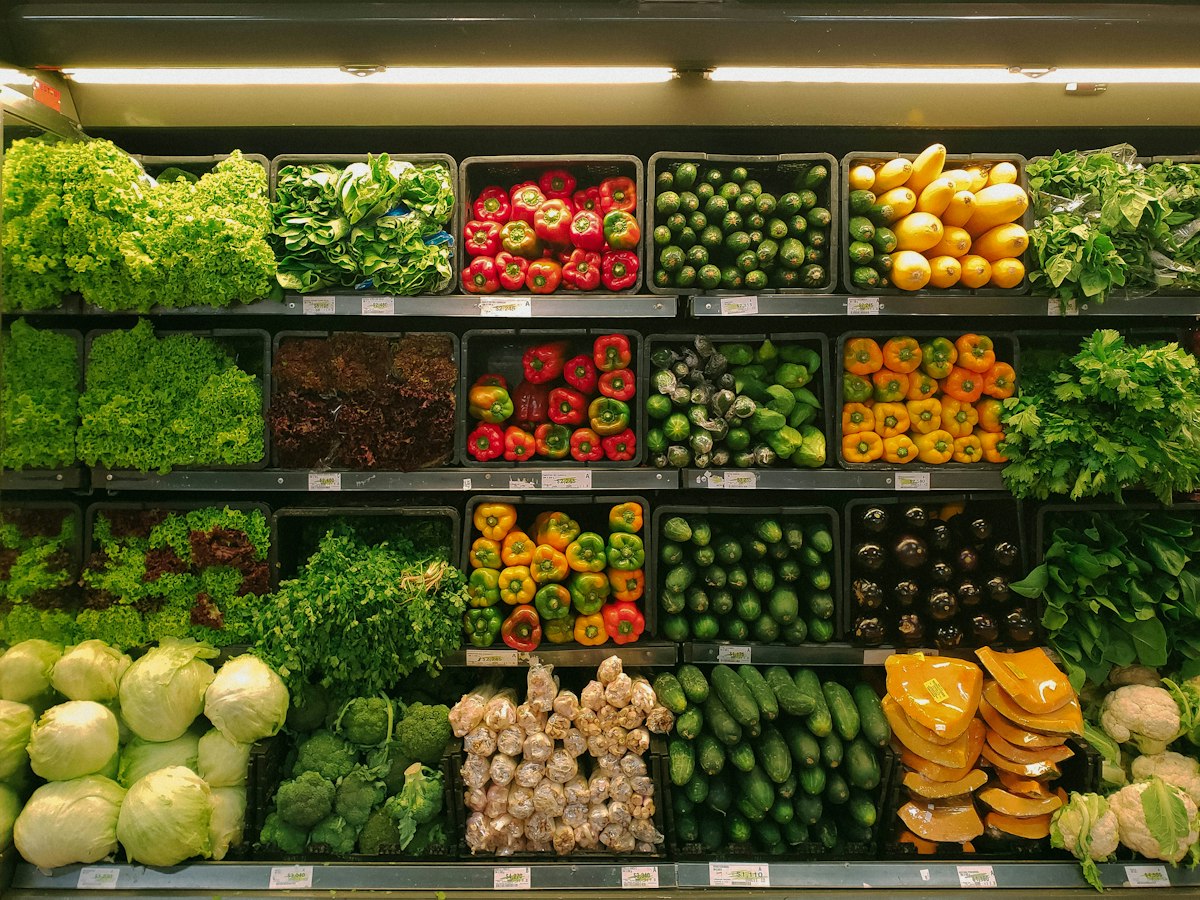
When I went hunting for my own leaks, the trick was to stop looking at the tasks and look at the handoffs:
- From "what I own" to "what I buy." Almost nobody shops against an accurate picture of their own pantry — the single most expensive blind spot in home cooking, because every forgotten jar is a thing you'll buy twice.
- From "what I grow" to "what I cook." A garden or a countertop hydroponic unit produces food on its schedule, not yours. Eight heads of lettuce come ready the same week, and most of them bolt before anyone gets a fork in.
- From "what I planned" to "what I ate." The plan never updates when real life walks in, so by Thursday it's fiction — and fiction doesn't help you shop next week, which is how last week's miss seeds next week's.
Every one is a spot where intention and execution come unstuck. And every one is fixable — but only once you stop thinking in meals and start thinking in systems. That's the payoff of taking food planning vs meal planning seriously.
Sourcing Is the First Mile, and It Sets Everything Else

We've been trained to think the work starts in the kitchen. It doesn't. It starts at the source — and the source you pick quietly dictates everything downstream.
Buy from a big-box store on a fixed weekly list and the job is mostly procurement: get the right things, don't double-buy, don't forget the one item that anchors three dinners. Shop a farmers market and the whole logic flips — now the supply leads. You don't decide on ratatouille and go hunt down eggplant; you find a glossy, faintly bitter heap of it and let the eggplant tell you what the week looks like. That's why so many market hauls rot in the bag — when supply leads, you've committed money before you've committed a plan, so the plan has to catch up fast or the produce wins the race to the compost. (If that's you, I wrote a whole piece on eating seasonally without the guilt — the planning discipline is the missing half.)
And then there's the most intimate source of all: food you grew yourself. This is the frontier most "meal planning" tools pretend doesn't exist, which is odd, because plenty of households now grow a little of their own. A tomato plant on the porch. Basil on a windowsill that goes from nothing to jungle in three weeks. The trouble was never growing the thing — it's that the harvest lands outside any plan. The zucchini all comes in at once, and you bake bread until the sight of it makes you tired.
This is exactly the seam The Grove was built to close — because a surprising number of people planning their food are also, quietly, growing some of it. You log the harvest, and it changes what the week suggests. The eight heads of lettuce stop being a problem and become the reason the week leans toward grain bowls and big salads — the garden becomes part of dinner instead of a hobby beside it. I dug into that bridge in garden-to-table food planning, and the same logic runs through home hydroponics in 2026 — a glowing rack of butter lettuce in January is a sourcing decision too, and it still needs a plan.
If this is your kind of thing, the next one lands in your inbox — subscribe below.
Stocking and Prepping: The Larder, Not the Lunchbox

Here's where the old meal-prep gospel went wrong, and I know because I tried it and quit. The aesthetic sells a fantasy of five identical containers — Sunday's labor portioned into a week of sameness. The problem nobody in those photos admits: nobody actually wants to eat the same lunch five times. Your appetite gets bored — the pleasure of a food drops the more you eat it in a row — and the containers run straight into it. By Wednesday they feel less like dinner and more like a sentence being served.
The honest version of prepping isn't assembling finished meals. It's stocking a larder. You cook a pot of grains, braise a protein until it pulls apart under a fork, roast two trays of vegetables until the edges go dark and sweet — and you keep them as components. Open parts, not closed meals. That same braised chicken is a grain bowl Monday, a wrap Wednesday, a brothy soup Friday. You're not repeating a meal; you're improvising off a well-stocked shelf, which sidesteps the boredom entirely.
This is where food planning vs meal planning stops being a word game and starts changing your actual week. A meal plan locks you into Thursday's one specific dinner. A food plan stocks Thursday-You with good components and trusts her to assemble dinner based on how the day actually went. One is a script; the other is a full shelf and a little faith. The relief is wildly underrated — opening the fridge on a tired Tuesday to things already most of the way to dinner isn't laziness rewarded; it's a system paying you back. (Saved Meals is built for exactly this — keep a combination that turns out great, and your own canon of weeknight wins compounds. I made the full case for the larder approach in the Sunday reset.)
The Plate Connects to the Body — and a Plan Should Know That

There's a version of eating-for-health that's curdled into its own diet culture: the macro spreadsheet, the protein gram tracked with the anxious vigilance people used to spend on calories, the meal flattened into a math problem you pass or fail. I get the pull — I've been the guy weighing chicken on a scale at 11 p.m. wondering where the joy went. It also misses most of the point of why we eat.
The food planning frame is simpler, and more honest about how humans behave. What's on your plate connects to your body, and a real plan holds that connection without letting it run the whole show. Eating with intention for muscle, steadying your gut with real plant variety, feeling less foggy at 3 p.m. — those goals belong inside the plan, not stapled on top as a guilt mechanism. A target you enforce by hand every meal is one you'll eventually drop; a target baked into what gets suggested is one you don't have to fight. That's where an AI food planner earns its keep — not by barking numbers at you, but by quietly shaping the options. Grovli's Nutrition Advisor is a chat you can argue with — make this week higher-protein but keep two vegetarian dinners — and it reshapes the plan instead of grading you. Nutrition is one input to food planning, not its master. I went deeper on that tension in beyond dieting and the longevity plate.
What a Food Planning System Actually Does

So what does it look like when the whole loop is connected, instead of stitched together with memory and luck? The steps start talking to each other. And yes — "an AI builds your food plan" is a sentence every app says now. So let me be specific about the one mechanical thing that moves the needle.
It starts with what you have. Grovli's Pantry holds an actual inventory of your kitchen — scanned by barcode or added by hand — so the plan isn't drawn on a blank page. It pulls in what you're harvesting from The Grove. It builds a personalized Plan in under thirty seconds across more than forty cuisines and a dozen dietary modes — Balanced, Mediterranean, Vegan, Keto — shaped around your goals. And then the part that quietly saves the most money: the Grocery list dedupes against your Pantry before it's even built. It won't tell you to buy the cumin you already own three jars of, and it syncs to Instacart — so the loop closes at the exact spot where most plans fall apart, the actual point of purchase.
That's the whole thesis in working form, and the cleanest answer to food planning vs meal planning I can give you. Not five disconnected tools you run in sequence and have to remember to update — one system, where the garden knows about the plan, the plan knows about the pantry, and the pantry knows about the list. The green beans don't get bought twice and abandoned once, because the system remembers what your brain can't.
If you live in the weeknight crunch more than the Sunday-cook fantasy, the same machinery makes a fast dinner actually fast — I broke that down in the weeknight dinner without the time, and the budget version lives in cutting your grocery bill. Different doors, same house.
Food Planning vs Meal Planning: Become a Food Planner

Here's what I'd leave you with. The reason your meal plan keeps falling apart probably isn't you, and it definitely isn't your willpower. You were handed a tool sized for one slice of a much bigger problem, then made to feel bad when it couldn't do a job it was never built to do. Meal planning alone is not enough, because it was only ever a fragment.
Food planning is the honest size of the thing: sourcing, growing, buying, stocking, prepping, and eating, understood as one connected system instead of six lonely chores — not a tidier schedule, but a loop that actually holds together. When those steps remember each other, feeding yourself gets lighter. Fewer wasted dollars. Fewer abandoned vegetables. Fewer Tuesday nights staring into a fridge that somehow contains everything and nothing. That's the shift Grovli is built around, and it's why we'll go to the wall on the word: it's a food planning app, not a meal planning one, because the bigger word is the truer one. Build your first plan free in the web app, or pick it up on the iPhone app and start with whatever's in your kitchen tonight. And if you just like thinking about food this way, follow CitiGrove and Grovli on Instagram.
The beans were never the problem. The plan was too small. Make it bigger.
- pantry-first cooking
The Pantry-First Kitchen: Cooking From What You Already Own
I spent a Saturday pulling every item out of my pantry, and found four cans of chickpeas and three half-jars of cumin. The pantry-first kitchen fixes the most expensive blind spot in home cooking.
Read essay → - reducing food waste
The Low-Waste Kitchen Isn't About Trying Harder
I taped a list inside my cabinet and logged everything I threw out for a week. None of it was a cooking failure. All of it was a planning gap — and planning gaps are fixable by design, not willpower.
Read essay → - winter cooking
Cooking Through Winter: A Cold-Season Food Plan
Winter is a different cooking problem. The produce thins out, the cravings turn to comfort, and the dark afternoons sap the will to cook at all. Eating well through the cold half of the year is a planning job, not a willpower one.
Read essay →
Let Grovli plan your food, not just your meals.
A personalized food plan in under 30 seconds — from what you grow to what lands on the table, with the grocery list already done.