
Home Hydroponics 2026: Costs, Yields, Reality
I ran two systems for two years. Home hydroponics 2026: the honest costs ($100–$600), what actually grows indoors, and how a steady harvest rewires how you plan food.
It's the second week of January, dark by five, and there's a small machine on my kitchen counter making more basil than I know what to do with. The light it throws is a faintly clinical pinkish-white — the color of a sunrise rendered by someone who's only ever read about sunrises. Under it, six plants are doing something that should not be possible on a fourth floor with north-facing windows: growing fast, lush, and entirely indifferent to the weather outside. That's the quietly magical promise of home hydroponics 2026 — fresh green things, in your kitchen, in the dead of winter, with no yard and no dirt under your fingernails.
It's also, if I'm honest, a promise wrapped in a lot of marketing fog. The countertop and vertical systems being sold this year are slicker and cheaper than they've ever been, positioned somewhere between a stand mixer and a houseplant. The photos are gorgeous. The numbers on yield and cost are usually vague, or quietly optimistic, or both. So here's what the product pages won't do and I will: I've run two of these for a couple of years now, so I'll give you the real arithmetic from my own outlet and water bill, tell you what actually thrives under those lights and what just disappoints, and then talk about the part nobody mentions — what a constant fresh supply does to the way you plan food.
The Three Shapes Home Hydroponics 2026 Actually Takes
Strip away the brand names and there are really just three shapes the home version takes, and they sort cleanly by ambition and footprint.
The countertop unit is the gateway. Think AeroGarden and its many 2026 descendants — a base reservoir, a few planting pods, an arm of LED grow lights overhead, usually a little pump bubbling oxygen into the water. It holds anywhere from three to twelve plants and sits where your toaster sits. This is the format most people mean when they ask about a countertop hydroponic garden, and it's the one I'd point a beginner toward without hesitating — low stakes, fast payoff, hard to kill.
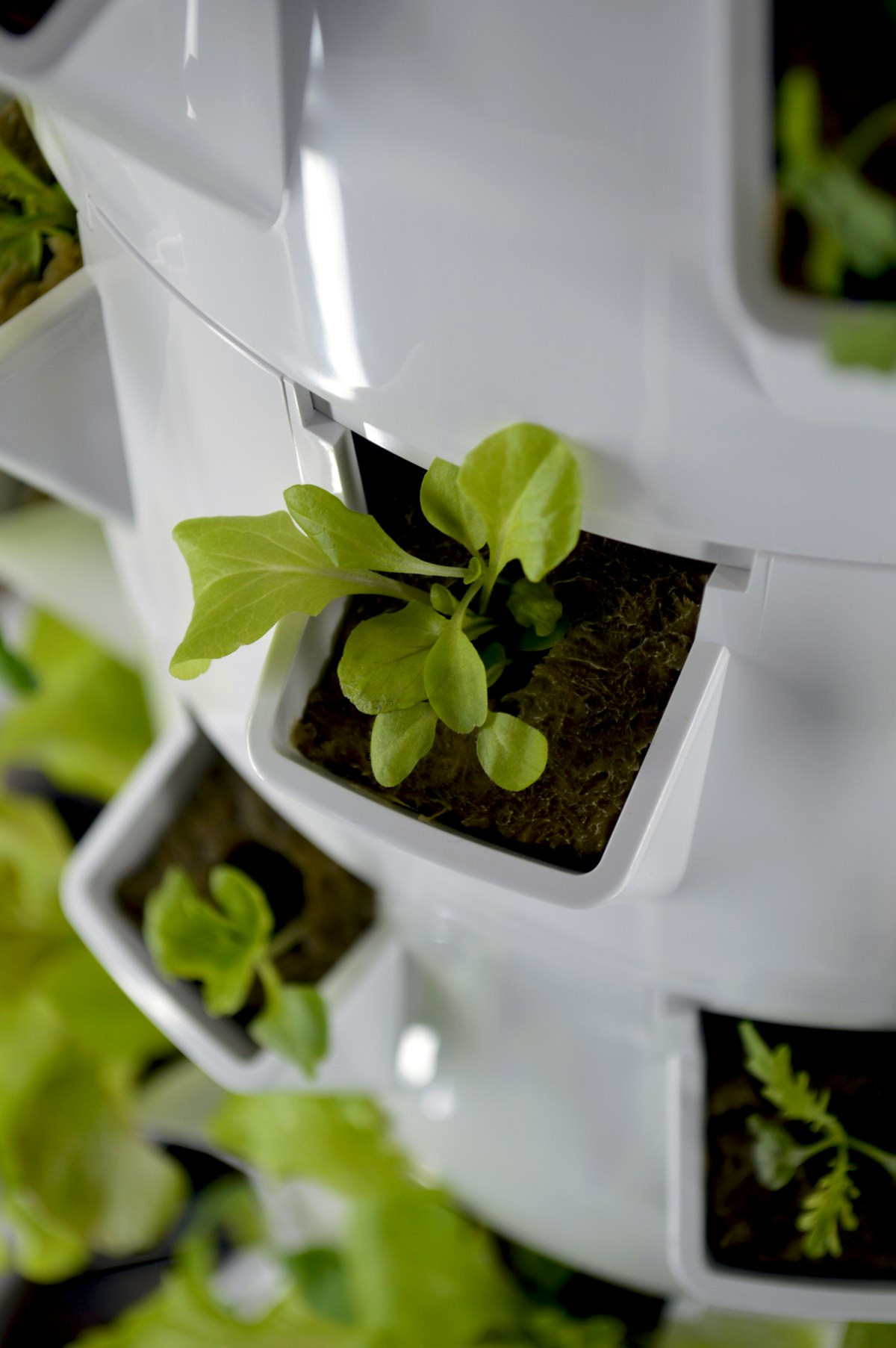
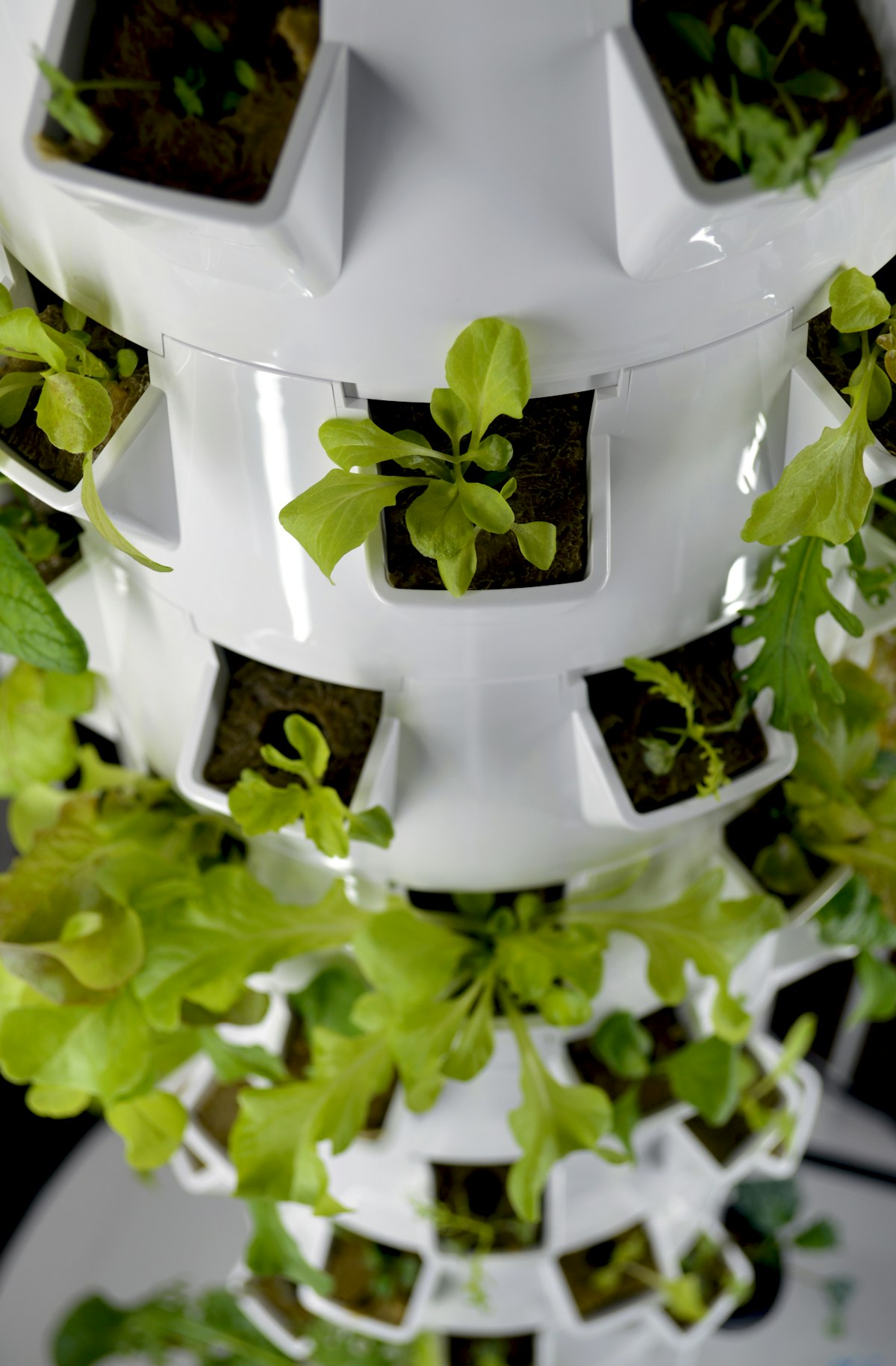
The vertical tower is the step up. These are the floor-standing columns — Lettuce Grow's Farmstand is the famous one, but the category has filled in around it — that grow twelve to thirty-six plants in a footprint barely bigger than a bar stool. Many are aeroponic: the roots dangle in open air inside the column and get misted with nutrient solution instead of sitting submerged. A vertical hydroponic garden is the honest answer for someone with no yard who still wants volume — you're buying vertical real estate precisely because you've got no horizontal real estate to spare.
The DIY build is for the tinkerers, and it's the one that taught me how any of this actually works. The friendliest version is the Kratky method — a passive technique where the plant sits in a net cup above a reservoir of nutrient solution; the water level drops as the plant drinks, and an air gap forms on its own so the roots can breathe. No pump, no electricity beyond a grow light, nothing that moves. A mason jar, a lettuce seedling, and you're running. It's the cheapest possible way in, and it teaches you the underlying logic better than any appliance ever will, because there's nothing between you and the mechanism.
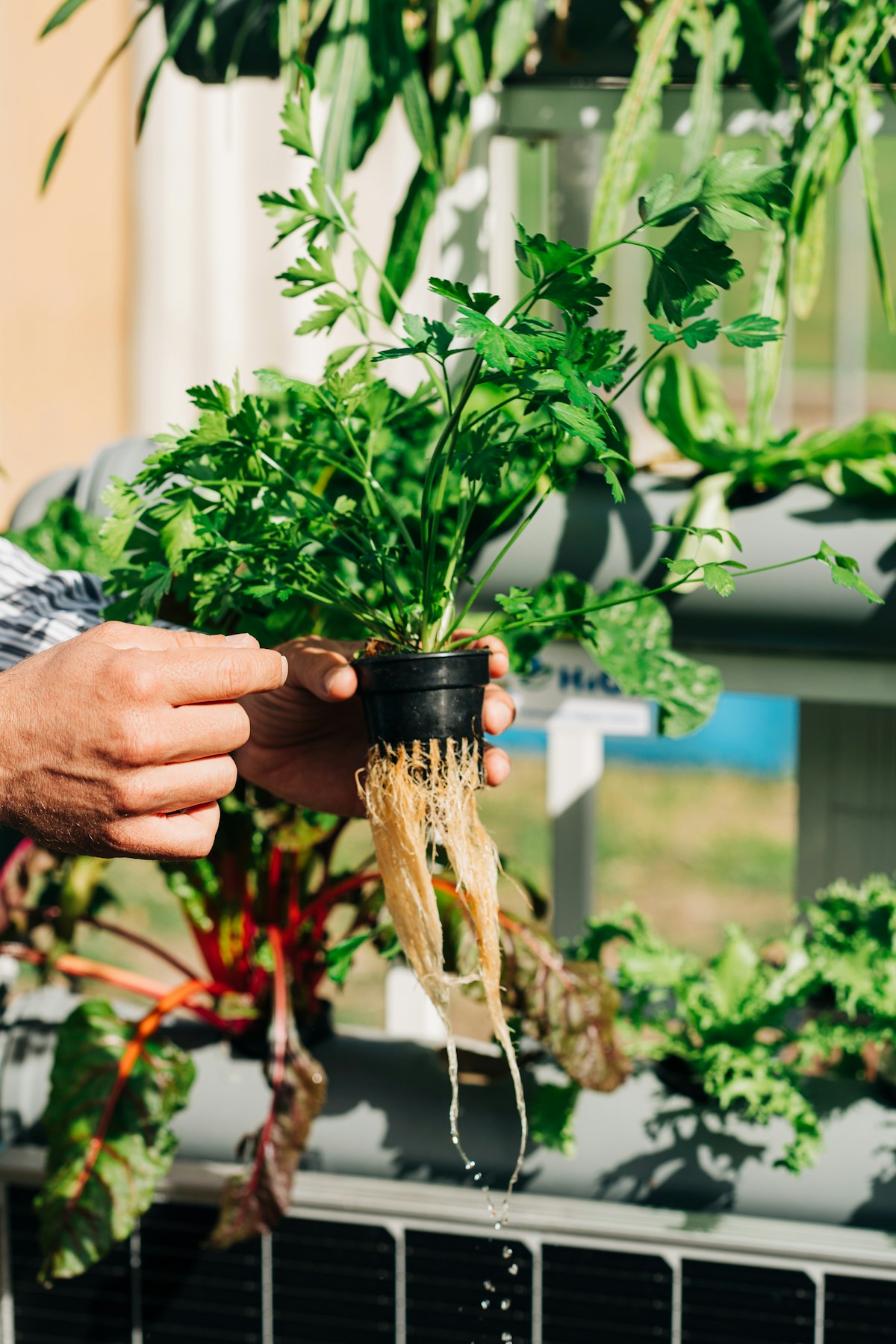
The common thread across all three is the thing that makes it work indoors at all, and it's worth understanding because it explains everything downstream. You're growing without soil, feeding the plant a dissolved nutrient solution straight at the roots, and standing in for the sun with LED grow lights tuned to the red and blue wavelengths plants actually use for photosynthesis. Cut out the middleman — the soil the roots normally have to mine for food — and growth genuinely outpaces a garden bed, using up to ninety percent less water than soil farming, because the water recirculates instead of draining away. That water figure isn't a gimmick. In a drought-prone state, it's a real reason to choose this over a patio planter.
The Honest Cost of Home Hydroponics 2026
Here's where I want to be a friend instead of a brochure. Indoor hydroponics for beginners has a cost structure that splits in two, and only one half ever shows up on the price tag — which is exactly why people get surprised.
The upfront number is the easy part. A basic countertop unit runs roughly $100 to $200. A mid-range one, with a taller light arm and app connectivity, lands around $200 to $350. A vertical tower — the thirty-plant kind — usually sits between $350 and $600, depending on size and whether it's aeroponic. The DIY Kratky route can be done for under $40 if you already own a grow light, and a decent clip-on LED is maybe $30 to $60 on its own.
The ongoing number is the part the unboxing videos skip right past:
- Seed pods or seeds. Branded pod kits are the razor-and-blades model — convenient, recurring, and marked up. A twelve-pod refill might run $25 to $40. Buy your own seeds and reusable net cups with rockwool or grow sponges and the same plant count drops to pennies. I learned this the expensive way, paying for pods for a year, so you don't have to.
- Nutrients. A bottle of two-part liquid nutrient solution is $20 to $40 and, used at the right dilution, lasts a surprisingly long time — often a full season or two of harvests. It's the smallest line item, and the one people irrationally fear most.
- Electricity. The LEDs and pump are the real recurring draw, running twelve to sixteen hours a day. Realistically that's a few dollars a month for a countertop unit, a bit more for a tower running brighter lights longer. Call it the cost of a couple of coffees.
- Water and your time. Topping off the reservoir, checking the nutrient level, the occasional full rinse-and-refill. Fifteen minutes a week, give or take. Not nothing. Not much.
So the real question of home hydroponics 2026 — hydroponic yields versus cost, is it worth it — comes down entirely to what you grow. Which brings us to the part that decides everything.
What Actually Grows Well (and What's a Trap)
I've killed enough plants under those lights to have earned some opinions. Here they are, sorted by how the economics and the experience actually shake out.
Leafy greens are the layup. Lettuce — especially loose-leaf and butterhead types — grows so well indoors it feels a little like cheating. Here's the trick that makes it pay: you harvest the outer leaves continuously and the plant keeps pushing new ones from the center, so one seedling feeds you for weeks rather than ending in a single cut. Arugula, baby kale, Swiss chard, mustard greens all thrive too. A butterhead head you'd pay three or four dollars for at the store costs you cents, and it's alive right up until the moment you eat it — a different food entirely from the bagged stuff slowly turning to slime in your crisper.

Herbs are where the money is. This is the crop that flips the whole equation, and the math is almost comic. Picture the supermarket herb economy: a plastic clamshell of basil is three or four dollars, you use a third of it for one recipe, and the rest blackens in the fridge within days — so your real cost per usable gram is brutal. A basil plant under a grow light produces for months and you cut only what you need. The price-per-usable-gram gap is enormous, sharper than almost anything else you can grow at home. Basil, cilantro, parsley, mint, dill, chives, thyme — these are the crops that make a countertop system pay for itself.
If you only ever grow herbs and salad greens, you've already justified the machine. Everything past that is upside, experiment, and the specific pleasure of pulling a strawberry off a tower in February.

Microgreens are the speed run. Sunflower, pea shoots, radish, broccoli microgreens — seed to harvest in seven to fourteen days, and they sell for absurd prices at the store precisely because they're so perishable they can't survive the supply chain. A ridiculously efficient use of light and space.
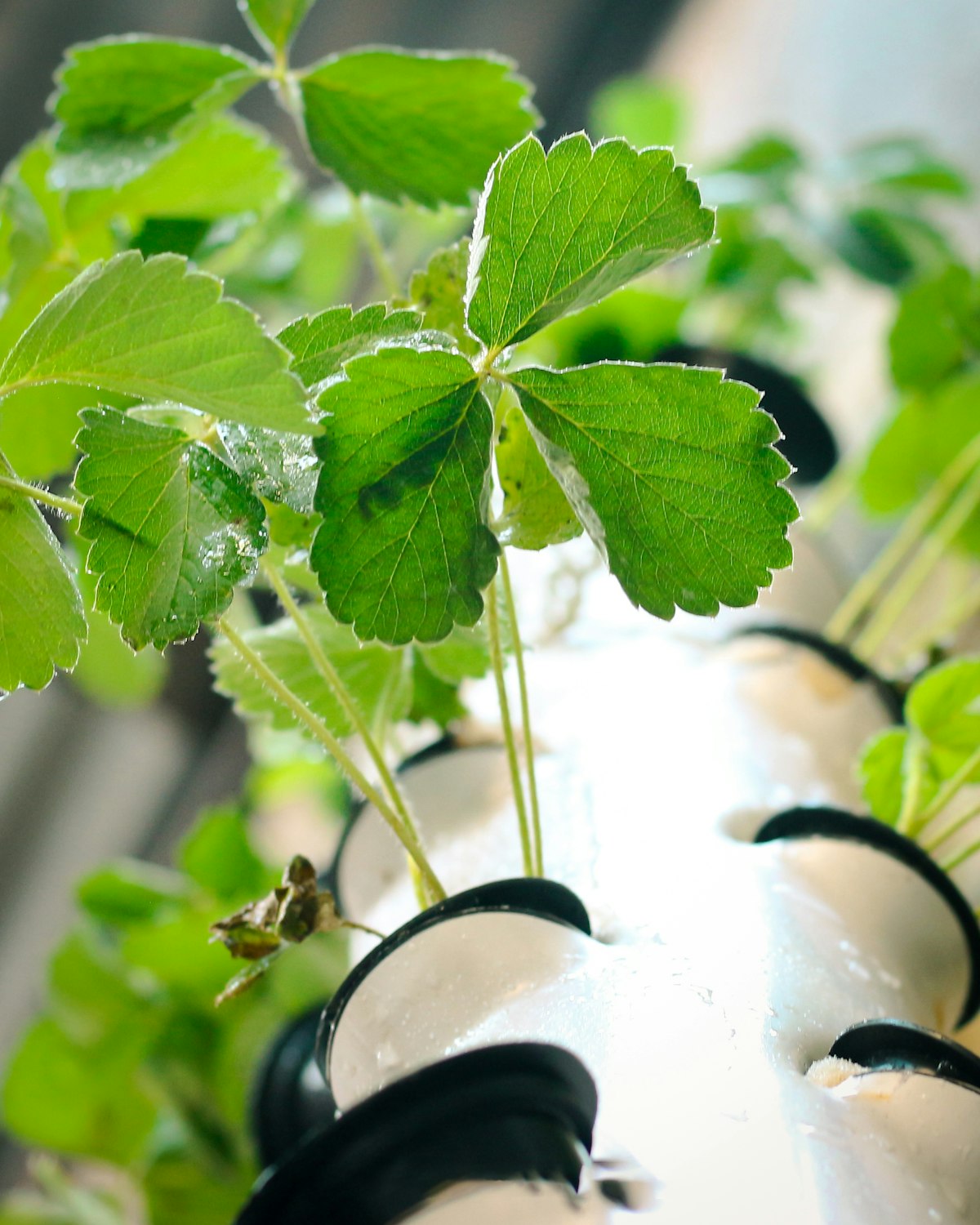
Strawberries and edible flowers are the joy crops. They work — strawberries especially do well in a vertical tower — but they're slower and fussier, and the yield-to-effort ratio is more about delight than grocery savings. Grow them because pulling a warm strawberry off a column in the dead of winter is genuinely wonderful, not because it'll dent your bill.
And the traps: tomatoes, peppers, squash, anything that wants to become a large fruiting plant. People see "you can grow tomatoes hydroponically!" and picture a harvest. Here's the why it disappoints: a fruiting plant needs far more light than a leaf does, and a countertop arm built for basil simply can't deliver it — so what you get is a leggy plant straining toward the light, producing four sad cherry tomatoes over two months. It's possible in a big tower with serious lighting. In a countertop unit, it's a heartbreak. Grow the greens and the herbs; let the farmers market keep the tomatoes.
The Part Nobody Talks About: A Constant Supply Changes How You Plan

Here's the thing that genuinely surprised me, and the reason I keep the machine running. The challenge of home hydroponics isn't the growing. The systems are good now; the growing mostly takes care of itself. The real challenge is that you suddenly have a steady, renewing supply of fresh things — and no automatic plan for using it.
This is a real, unglamorous problem, and it's worth seeing clearly because it's the opposite of what you'd expect. Twelve heads of butter lettuce don't ripen politely, one at a time, on your schedule. They come ready in a cluster, and a flush of basil waits for no one. If you're improvising dinner every night, half of what you grow bolts, goes bitter, or ends up in the compost — and you've faithfully recreated the exact supermarket waste you were trying to escape, just three feet closer to home. Growing it was never the skill. Using it is.

Which is why I've come to think of indoor growing as a planning practice as much as a gardening one. It works best when the harvest is something your kitchen knows about — when "I've got a constant flush of cilantro and butter lettuce" becomes an input to the week instead of a happy surprise you keep forgetting until it's gone soft.
That's the gap Grovli was built to close, and it's why I keep insisting the honest frame here is food planning, not just meal planning. Meal planning is the narrow slice — which dinners on which nights. Food planning is the whole loop: what you grow, what you already have, what you buy, what you actually cook. A countertop garden lives squarely in that loop. In the app, The Grove is the piece that knows about your indoor harvest — you log what's coming ripe, and that flush of basil and lettuce feeds into what Plan suggests for the week. A wall of greens becomes a week that opens with a big herby salad, then a green curry heavy on cilantro, then a pesto night that spends the basil before it flowers. The plant stops being decoration and starts being groceries.
If this is your kind of thing — the part where growing meets the dinner you actually make — the next piece lands in your inbox. Subscribe below.
So, Is Home Hydroponics 2026 Worth It?

Let me give you the answer I'd give a friend over coffee, because "it depends" is a cop-out and you deserve better.
If you have no yard, eat a lot of fresh herbs and salad, and would otherwise be buying clamshells of basil you mostly throw away — then yes, unequivocally. Start with a countertop unit in the $100 to $200 range, grow herbs and leafy greens, skip the branded pod subscription after your first round, and you'll likely break even within a year while eating better-tasting greens than the store sells. That's the highest-confidence recommendation I can make.
If you want volume and have a corner of floor to spare, the vertical tower is the genuine apartment power move — thirty plants in the footprint of a stool, no yard required. Just go in knowing it's a bigger commitment of money, electricity, and attention.
And if you're skeptical, or just curious, build a Kratky jar for the price of a sandwich and watch a lettuce grow out of a mason jar on your windowsill — no pump, no fuss. It's the cheapest possible way to learn whether this is a hobby you'll keep or a phase you'll abandon, and you're out almost nothing if it's the latter.
What I won't tell you is that any of this is free food or zero effort. It's neither. It's a small appliance that makes a real, renewing supply of the most perishable, most marked-up produce in the store — and it pays you back in proportion to how well you fold that supply into the rest of how you eat. The growing is the easy, magical part. The planning is the part that makes it pay.
If you want to keep the thread going from the garden to the plate, this pairs naturally with how I think about growing food and folding it into a real plan, and with the bigger project of cutting a grocery bill without eating worse. For more of this kind of thinking — and the occasional photo of a strawberry grown in January — CitiGrove and Grovli are worth a follow on Instagram.
You can build your whole food plan — garden, pantry, and all — on the Grovli iPhone app, or start from your browser. Either way, the machine on your counter is only half the system. This is the other half.
- grocery shopping
The 20-Minute Grocery Run
I timed a normal grocery trip once. Eighty-four minutes. Almost none of it was walking or waiting — it was standing in aisles deciding what to cook. Move the deciding out of the store and the run collapses.
Read essay → - macro tracking
Tracking Macros Without Losing Your Mind
I spent a while weighing chicken on a kitchen scale at 11 p.m., logging every gram, wondering where the joy went. Macros are a useful tool. The daily-confession ritual around them is the part that breaks people.
Read essay → - cost of takeout
The Real Cost of "I'll Just Order Something"
The delivery app makes ordering feel free and cooking feel expensive. Run the actual numbers — money, but also time, health, and the convenience tax — and the reflex flips. "I'll just order" is the costliest sentence in your week.
Read essay →
Let Grovli plan your food, not just your meals.
A personalized food plan in under 30 seconds — from what you grow to what lands on the table, with the grocery list already done.